
Is it just me or does the constant need to delete game saves to make room for others get kind of tedious and annoying? Home consoles have adapted to include hard drives, and come close to eliminating the problem. However, portable systems, even with memory card slots, just never had the capacity. This is especially true now that handheld gaming systems are getting downloadable content and media support like their homebound brethren.
That is, until now. SanDisk, the leading developer of flash memory cards, announced cards for the three top portable systems, which rival some personal media players. The new line up includes a 16GB Memory Stick Micro™ (M2)™ card for the Sony® PSP® go system; a 32GB Memory Stick PRO Duo™ and Memory Stick PRO-HG Duo™ card for the Sony PSP® system; and an 8GB SDHC™ card for the Nintendo DSi™ system. For full details read the original press release here.
Each individual card practically doubles the memory capacity of their respective units, and are not limited to just gaming systems. Their compatibility extends to most electronics that use the same card size. What makes these special then? Read and write speeds that keep your data flowing fast and free, and avoid choppy video streaming and audio hiccups.
All of these SanDisk offerings are shipping now in the United States except the 32GB SanDisk Memory Stick PRO-HG Duo card, which will be shipping world wide a little later in October. Individual retailers will set final pricing.
To view Etronics.com’s full selection of current SanDisk Products, click here.
Read more!
Thursday, October 1, 2009
Insufficient memory problems? Hopefully, not for long.


Thursday, October 23, 2008
Yamaha's Audiogram Series Brings Powerful yet Affordable Audio Recording to any Computer
 Yamaha’s AUDIOGRAM 6

Truly a complete recording solution, the AUDIOGRAM Series bundles revolutionary hardware interface with professional grade software. CUBASE AI, the included music production software, turns any computer into an easy-to-use, 48-track, music production system - capable of producing professional quality demos.
“The AUDIOGRAM 6 features 2 XLR combo inputs with preamp, two stereo inputs, and one-knob compression for dialing in the desired sound from microphones and instruments, and a USB jack for connecting to a computer.
The compact AUDIOGRAM 3 features one phantom powered combo input switchable for microphones or instrument recording, a stereo input, a stereo and headphone output and a USB jack.
The AUDIOGRAM Series are now available for $149.99 retail (AUDIOGRAM 3) and $199.99 retail (AUDIOGRAM 6)."

Read more!
Monday, August 4, 2008
Ion VHS to DVD Transfer System

Ever since I stowed them away, with every intention of reliving their glory, my stacks of old VHS tapes have been clamoring to live on in the digital age. Now, their dreams of immortality have new wings. Ion has released VCR 2 PC
which is, as it’s name suggests, a VHS player that outputs thru USB to a Windows machine running XP or Vista. Not only can it record tapes directly to DVD, but it can also record any analog NTSC source, digitally, by using the RCA inputs in the front of the player. So even analog camcorder tapes can be transferred to DVD, assuming my camcorder still works.
Finally, I can free those original Star Wars VHS tapes, the ones without the crappy digital enhancement, from analog purgatory - along with the all the embarrassing home movies of school plays and summer vacations. Actually, on second thought, I may just stick with transferring the blockbusters. Hopefully your home movie moments caught for posterity aren’t as ego bruising as mine.
Oh, and once the movies have been transferred it’s not trash, VCR 2 PC hooks up to the tele too, using composite AV output. VHS lives on!
Read more!
Tuesday, July 29, 2008
Cut and Paste on iPhone with Magic Pad
 MagicPad software from Proximi finally brings copy and paste to the iPhone. Something Apple developers have been apparently ignoring forever, gee thanks geeks. MagicPad also allows rich text editing. Colors, strikeouts, underlines, bold, italics, as well as various fonts at different sizes can be applied to any typed text. Now don’t go getting all excited and run over to the app store just yet, ‘cause Apple is still mulling over whether or not to offer the new app to us. Huh?
The only other small consideration… you can't carry the clipboard to other apps. Other than that MAJOR drawback, the app seems very promising. Text formatting is emailed in tact and the app is super simple to operate. Peep the demo video after the break…
via Company Site... Apple iPhone Apps
Read more!
Monday, July 28, 2008
Samsung's Latest Hybrid HDTV/Moniters
 Few hybtid devices make as much sense as these.
Samsung has just started shipping a hybrid that many saw coming from a mile away. They have just released their latest line of wide format computer monitors that will include an ATSC/ Clear QAM digital tuner built right in. The T220HD (1680x1050), T260HD, and T240HD (1920x1200) will be able to pick up the over the air or cable HD broadcast signals that most major stations already transmit.
The hybrid display offerings will range from 22 to 26 inches making them perfect for a monitor upgrade - with the added benefits of being a TV. The addition of an ATSC tuner will also take care of that pesky DTV transition. Samsung doesn’t skimp on inputs either. The new line sports more connections than a presumptive presidential candidate, with composite video, DVI, component, TV (digital TV / analog TV) and front and rear HDMI input. If only I didn’t own an iMac... On second thought, I could go for a totally unnecessary second display, I need a new TV and these are sick looking.
Read more!


Wednesday, July 2, 2008
Nikon D700 is Offically Announced!
 It’s finally happened. Nikon has released us professionals and photographic enthusiasts from DX format hell with their announcement of a full frame digital SLR, the Nikon D700 - although it may be a little late.
Many photographers that couldn’t or wouldn’t lay down five grand for a Nikon D3 still desired a full frame sensor. Thus, Nikon unwittingly forced many photographers to switch, albeit reluctantly in many cases, to a Canon. Even after decades of Nikon use the Washington D.C. bureau of the Associated Press outfitted their staff photographers on Capital Hill with Canon gear a few years back.
The Nikon D700 is still a bit pricey for your average shooter, at $2995, but what you get for all that scratch is a supped up, rugged, speed demon with a taste for action.Making the case for Nikon
For starters, the Nikon D700 rips off 5 frames per second (up to 8 fps with the battery pack grip), has a measly shutter-lag of 0.4 milliseconds, a blazing start up time of .12 seconds, and a give me more card write speed of 35MB a second.
Improved noise reduction and a wider dynamic range coupled with an ISO range that can be stretched from it's native 200-6400 ISO sensitivity to an ISO range of 100- 25,600 means that whether you're shooting in intense light or low light, you'll cope with ease when you pack the D700.
Believe it or not, there are those of us that contract a case of “butterfingers” every now and again. Luckily for us, Nikons in the D700’s range don’t seem to mind the occasional tumble; in fact, their ruggedness is legendary among photojournalist.
Did I mention action... Nikons have the superior auto focus system, the 51 AF points, 3D tracking (to lock on to moving subjects), and 46 sensors the photographer can activate (which define a focus area) will make sure - whatever it is that your aspiring to capture, it will be in focus.
Freeing us from the viewfinder is Nikon Live View, which allows photographers to compose the subject on the LCD, something even point and shoots have always done. Sony Alpha A350 was the first DSLR with this feature. Another first, for Nikon at least, is the D700's self-cleaning sensor.
With a little extra software you can control the camera functions remotely via PC, but as for composing a shot from New York that is being photographed in Beijing, you're gonna need all little more than just software. Some assistants and superior communication skills wouldn't hurt.
these should be ready to ship at the end of the month.
Read more!

Monday, May 19, 2008
JVC's YouTube Cam with a 35x Zoom
 JVC's GZ-MS100 is a YouTube skewed SD card camcorder; basically, it's a 35x high powered Konica Minolta lens with an 2.7-inch LCD attached. No hard drive, recording heads, or tape reels have definitely lightened things up a bit. This slight, sight and sound recorder weights in a little over a half a pound. Making holding the shot much less taxing.
The GX-MS100 lets you shoot and capture all the moments uninterrupted; no more time spent looking for tapes or having them run out at the most inopportune time. SD cards have allowed lengthier recording times of 3hrs to 19hrs. Unfortunatly, you would need to plug in this viral video maker to record that many hours, the battery life on the JVC GZ-M100 stands at around 2 hrs. More will cost ya.
Now, getting to the YouTube aspects of this guy; it has a one-button upload to the popular video sharing site using...
the included software. WiFi would have really given these units wings, but JVC doesn't included this seemingly obvious addition. The real new idea here is the built-in a video time limit, of 10min, when requested. This makes sure you don't exceed YouTube's time limit, saving users the time of editing for time.
Another JVC exclusive is Laser Touch Operation. This is touch sensitivity without the touch. You just hover or scroll your finger over the buttons and scrollbar, while a blue halo highlights your option, making sure the appropriate selection is made. The beauty here is the screen remains clean and fingerprint free. More on how well this work when we get some in...
..via release..
Read more!
Thursday, March 20, 2008
HTC's 'Dream' is the First Phone Slated to Run Android
Since November, HTC has reportedly been working on a phone that would run Google’s new platform Android.
The video below is a BBC report on Google’s platform. The demonstration was preformed on an unknown phone; that is, unknown until this morning when the news broke that HTC, a Google partner in the Android project, supplied the prototype for the report.
It’s called ‘Dream’, and HTC provides the capable candybar phone a full keyboard underneath the large touch screen panel (no multi-touch though), better than average processor speed (300Mhz), Google Map’s Street View, and a 3D processor for 30 fps gaming, all residing in a slightly robust 5 inches by 3 inches case.
‘Dream’ is set to ship around Black Friday; HTC will have good company with most of Google’s other partners planning similar launches around Turkey Day as well.
Read more!
Wednesday, January 30, 2008
Eye-Fi Wireless Digital Camera Cards
 Most photographers don't need to have their photos methodically dissected by an art director, sitting in front of a laptop, the moment after they have taken it, but who says you shouldn’t be able to wirelessly transfer your digital snaps instantly over your home network right to your hard drive?
Yuval Koren, co-founder of Eye-Fi, asked this same question and then started a business (if only we were all so resourceful). What he and his cohorts came up with is truly astonishing. Eye-Fi is a 2Gb SD card
This trick by itself is commendable, but Eye-Fi takes this seamless system a step further. You can even have the Eye-Fi service, which is free; upload your photographic memoirs to social networks, or online printing services.
Facebook/Myspace junkies, if you’re worried about image size restrictions in place at most social network sites, you don’t have to. Eye-Fi service automatically and, pretty much, instantly resizes your photos and posts them without photographers having to touch a computer or adjust anything on the camera to compensate for the site’s image size restrictions .
These transfers, to printing services and social networks, can happen without any computer intervention at all, it doesn’t even have to be powered up. If you'd like a copy sent to your computer, in addition to the web, you can select to have the uploaded images transferred to the computer, as well. Next time you power up the photos will be transferred.
This inexpensive Wi-Fi enabled SD card would be a great gift for your photographically inclined lover this Valentines Day, or just a nice tool for a burgeoning professional photographer.
Yuval's company would really take off if they could just get these cards to work, without setup, on any open wireless network. Wait, maybe that should be my nonexistent company's mission. What's Yuval's e-mail again?
Canon PowerShot A570IS 7.1MP Digital Camera with 4x Optical Image Stabilized Zoom
Axion AXN-9105M 10.4" LCD Digital Picture Frame/Multimedia Player
TDK DVD+R47 16x DVD+R Disc in Jewel Case (1 Pack)
Toshiba 4GB High Speed SDHC Memory Card


Read more!
Monday, January 28, 2008
Casio's Perfect Phone for a Disaster
This phone is marketed as a fitness phone, it has a calorie counter and a pedometer that displays calories burned and distance traveled. It is also sweat/waterproof. I think this disaster preparedness angle would be better, 'guess they don't what to scare us'.
 Normally, I’d leave this one alone, we don’t even sell phones anymore, but this standard looking flip is far too impressive to ignore. The big plus of the fetching phone, especially in a survivalist sense, is its disaster coping skills. This Casio could quite literally help save your life.
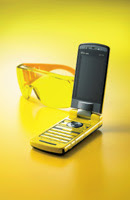 Disaster preparedness is a real concern for most city dwellers, think less “Escape from New York” and more hurricane induced floods. Unless your private road to Ohio is well under construction you might want to pick up one of these Casio W61CAs if they ever make the jump across the sea from the Asian.
Earthquake alert, which presumably could be modified for region (typhoon, hurricane, volcano, tsunami, etc.), provides you with valuable predictive information. This information alone could help save you, but what’s the good of knowing of an impending disaster if you don’t know where to go?
'Nabi' disaster, Casio W61CA's built-in disaster evacuation tool, aims to keep you up-to-date on evacuation route and traffic conditions via DMB; while directing you, thru GPS, to the quickest route to safety. Now, these systems are all dependent on the quality of information they are given but I’d rather have the Casio W61CA to depend on than my battery operated handheld radio.
A slew of other fine features make this Casio an awesome upgrade from their calculator watch days. ..via Gizmodo..
Sony ICF-SW7600GR FM Stereo Multi-Band World Band Receiver Radio
Garmin GPSMAP 376C
Oregon Scientific BAR636 Weather Forecaster with Temperature
Read more!
Monday, January 7, 2008
Sennheiser's MX W1 Wireless Earbuds
 Sennheiser doesn't play around with low-fidelity sound, like the kind you can expect from Bluetooth. These sultans of sound decreed their newest innovation at CES, a fully wireless hi-fidelity set of earbuds. These new buddies use 2.4 GHz radio transmission technology from Kleer.
RCA JetStream is the only other product on the market that uses Kleer's innovative technology. RCA’s arrangement is less than optimal. The great things about Sennheiser’s MX W1 is that there's no wire connecting the ear pieces and you aren't tied to a specific device; the transmitter jacks into any 1/8" output socket. The transmitter that plugs into your devices is smaller than a iPod Nano. It almost gets lost when straped to the back of the Nano, see pics.
The cost of using two receivers (two earbuds) rather than one, with a wire connecting the two phones, does bring the final cost up somewhat; innovation is costly. So, is being an early adopter. The price is rumored to be hovering around the $600 mark.
Soon to be Released Products
from Sennheiser Available for Pre-order:


Read more!
Samsung Dual Format Players BP-5000/U5500
CES NEWS Are you somewhat indecisive? Does the thought of selecting between two seemingly equal options make your palms sweat? This sounds likes many of us. As far as, the latest video disc format war (Blu-ray vs. HD DVD) chances are you, like me, haven’t made a decision on what format player you want to go with.
 If you’ve been sitting on the sidelines waiting for the companies backing the different formats to duke it out before scooping up your set, you’re not alone. In an effort to get money from us non-committal types, Samsung is slated to offer a two dual format single disc players “Duo HD”, the BP-U5500 (second half of the year) and BP-5000 (hitting warehouses now).
The BP-5000 is said to have shipped with some bugs in terms of sound processing. This will most likely be addressed in a software update by Samsung. One hopes that the BP-U5500 will ship without any major issues. However, with the addition of Ethernet access on the BP-U5500 if this is the case the player could be updated automatically. This addition also increases the amount of content that the player can access over the internet.
The newer BP-U5500 player also supports Blu-ray Disc’s ‘Final Profile’ which allows for more special features support (when present on the new disc releases). Samsung gives you the best of both formats without you choosing sides or locking yourself into a particular format. These two Samsung models also handle your existing media (CD/DVD) with ease.
..via gizmodo..Update: The spec page is up from Samsung BD-UP5000. Seems as if the production models are label BD-UP5000/5500. Blu-ray Disc Universal Player, I'm guessing.
Read more!
Wednesday, January 2, 2008
Alpine Uses iTunes Tagging in New DMRs
 Alpine and Apple having been engaged in a long standing courtship, have decided to take their relationship to the next level. Building on the successes of the iDA-X001, Alpine is releasing three more digital media receivers, for your auto, based on the same design functionality and iPod integration of this earlier model.
Of course, newer iPods will be compatible with these yet to be released Alpine head units, but the real windfall for Apple is the new iTunes tagging feature that will be incorporated into Alpine's flagship receiver, the iDA-X100.
iTunes tagging works in conjunction with HD radio. Let’s say, for whatever reason, your iPod playlist just isn’t ‘doing it’ for you. So you make the executive decision to switch over to HD radio programming (you just happen to have that module installed). Then things start to look up again, there’s this rockin’ song playing from some artist you haven’t discovered yet. In fact, you’ve enjoyed the song so much you would like to take note of the artist and song title. This all seems fairly plausible, right?
At this point, iTunes tagging comes into play; all you’d have to do is press a button, there by ‘tagging’ the song playing on the radio. That tag is then relayed to your iPod and when you next sync the iPod to your computer you’ll be prompted to purchase the tagged song at, where else, the iTunes store. How’s that for Marketing 2.0?
Also, seemingly in effort to build a buzz about their new releases Alpine has “leaked” their new product line brochure.
Read more!
Wednesday, December 19, 2007
Denon’s Compact Networked Audio Systems the S-52 and S-32
 These new Denons have put compact, full sound, digital source audio in its place…that place being wherever you want it to be. Their compact size and wireless capabilities, give you this new found freedom to setup these Denons just about anywhere there’s an outlet. Denon’s reputation for innovation is well founded, and their concept of ‘Whole Home Audio’ really comes to fruition with the S-52 and S-32. These dapper Dons of digital audio assert their impressive array of features from the moment you fire them up.
The new systems can do much more than play Wi-Fi radio, which they do. The S-52 and S-32 are networked audio systems, meaning they can connect to anything on your network, wirelessly, and play MP3, WMA, AAC, and WAV file formats from these networked devices. Don’t have a wireless network? It doesn’t matter; you can plug either of these Denons into your network via Ethernet. This will limit you a bit, but cords tend to do that.
Of course, they’re iPod ready via built in, drop and rock, iPod dock. Adding to ease of use is the multi-function scroll wheel; this ensures quick and intuitive navigation of the menu, music libraries, and streaming music channels. Even if you haven’t fully embraced the digital music revolution, yet, Denon gives you plenty of options.
Rhapsody digital music service has struck a deal with Denon to offer a no credit card required 30-day trial. Rhapsody is a renowned web service offering unlimited access to an extensive music catalog. If you have trouble pinning down exactly what you’re in the mood for, Rhapsody channels offers you a continuous stream of professional programmed music, which is sure to please.
Additional performance offered with the pricier S-52 includes, a slot loading CD player capable of decoding most popular audio formats, a built in HD radio tuner, and an XM mini tuner. These pale in comparison to the usability offered with the addition of a USB port which you can connect flash drives, MP3 players, hard drives, or any USB mass storage devices to the player. These mini media moguls are out now but going fast. Snap yours up today.
Read more!
Thursday, December 13, 2007
Motorola Ming 2
 This new sequel from Motorola is a bit of a mystery. Their machete of mass communications is also a multimedia assassin, rumored to have an impressive array of gadgetry. Ming 2 is a…3.2 MP camera, LED Flashlight (to aid autofocus), GPS, Wi-Fi enabled, talking dictionary, Linux based…phone. These images are mock ups of the proposed phone design. The rendering shows the large screen and clear plastic flip, same as its older sibling. Supposedly, these will hit selves in Asian sometime around February next year.
..gizmodo..
Read more!
Wednesday, December 5, 2007
Archos 605, Wi-Fi PMP for the Techie
 The Archos 605 Wi-Fi PMP, isn’t going to score you any cool points in the eyes of hipsters, they're hypnotized by shiny apples. But, as far as you and your cohorts are concerned this Wi-Fi enabled touch screen PMP is straight off the pages of Buck Rogers, and excruciatingly hip. Its elegance is not in its presentation. The beauty lays in its functionality, functionality that isn’t tied to a one-way file transfer or DRM video content from the manufacture’s own media store. Archos 605 mounts its internal memory as a drive on Mac or PC via USB, pretty basic (for any non-Apple PMP). You can then transfer whatever media or data files you wish, to and from the player’s memory. The memory offerings, which are substantial, come in 30, 80, & 160 Gigs capacities.
Screen size is always a draw with portable video players. Archos 605 has one of the largest on the market at 4.3-inchs. It displays in 800x480 resolution, so movies, pictures, and WebPages look the same as they would on your PC. They’ve also made the touch screen smudge resistance, somehow.
_540x380.jpg)
The best design features on any electronics are practical ones and because nothing screams impracticality like having to hold your video player while watching a two hour movie, this player has a sturdy metal stand built in. Also built into the unit is a speaker for sharing your movies in group viewing sessions. Archos 605's design drawbacks are the proprietary USB connection, its scratch magnet of a case and dirt prone white front buttons.
Archos 605 is a standalone player for music, videos, photos, and PDFs. The content portal, which is like online store, allows you to buy or rent movies and music from different providers, (how novel, competition in digital media distribution).
As with many devices from Archos, the 605 is a base for many add-ons. Marketing fluff aside, what you get in the box isn’t going to allow you to fully utilize the player’s capabilities. But then you wouldn't want to pay extra for stuff you might never use. At 20 bucks a pop, plug-ins allow for high definition playback, Wi-Fi internet radio, reading multiple video file formats, and more. If you plan on using Archos’ Wi-Fi connectivity to browse the net you need to purchase Opera web browsing software, $30. This mobile browser is highly rated and the flash plug-in gives you more of the web than Mobile Safari browser, which has no flash plug-in.
 The most expensive, and consequently the most useful, add-on is Archos DVR Station, or dock. It adapts the video signal to your television, then, turns your digital video player into a digital video recorder, hence the DVR in the name. The DVR allows you to record and playback your favorite television content on the portable player, or on your television. Why pay a charge to watch shows on your PMP that you’ve already paid for in your cable subscription? Archos DVR Station also includes a physical keyboard on the DVR’s remote making web surfing and emailing while lounging in the EZ-Boy much more viable.
Archos has released a versatile, relatively inexpensive, customizable portable player that is unmatched in screen resolution. You may have to drop some additional cash to enhance functionality, but the investment is completely worth it, especially when you travel. If you are thinking iPod consider what you’ll be giving up, drag and drop hard drive support, wirelessly rent movies and music, and DVR. Sure the presentation is a bit lacking, but do you buy PMPs to impress others or yourself?
Read more!
Wednesday, October 17, 2007
Holiday Showdown: Touch Screen Phones Come Out Swinging

[Image courtesy of Sprint Nextel Corp.]
Yet another touch screen phone has been unveiled today. HTC, a Taiwanese company, is the proud recipient of a deal with Sprint Nextel to provide the new phone. If you're not a Sprint fan there is an unlocked HTC Touch. The phone is based on a modified version of Windows Mobile 6 software which usually requires a stylus for the touch screen interface. HTC’s software modifications allow for finger touch operation. Its origins are evident, the phone still comes with a stylus. Also, there's no physical keyboard on the HTC Touch(Out of the three major carries that have touch screen phones Verizon’s LG Voyager is the only one with the actual keyboard.) Sprint Nextel’s data network was the first to introduce wireless web and it is the fastest data network here in the states. The speed of the AT&T’s data network connection has been criticized by users. The iPhone WiFi connection supplements for the data network’s shortcomings to an existent. The HTC is a smaller and lighter unit mainly due to the 3.5 inch screen size. If you’ve read this much, you are most likely asking yourself why you never heard of HTC. HTC has been producing PDAs and Smart Phones under other manufactures names for a while. Now, HTC is trying to build there brand here in the states. Piggy backing on the Sprint Nextel brand. This seems like it's a pretty good means to that end. Kudos guys, you’ll have ‘caviar dreams and Champaign kisses’ in no time.
Read more!
Tuesday, October 16, 2007
5.1 Surround Sound from Headphones?
 [Image courtesy Matsushita Electric industrial Co.and Ltd.]
Panasonic is a pioneer. (Is the word pioneer trademarked by the Pioneer Corporation?) In the pioneering spirit they’ve been busily perfecting that most elusive of beasts…getting five speakers and sub-woofer in a pair of headphones. Not just headphones, but wireless headphones to be exact. The Panasonic RP-WF5500 headphones really begin to impress once you discover their ability to work thorough walls and receive transmissions up to 30 meters from the base. The Panasonic RP-WF5500 phones are lightweights too, weighting in at measly 9oz with the battery attached. When you factor in their ability to reproduce a 5.1 channel system with a similar sense of directional sound, they really begin to out shine the competition. These marvels of modern technology are set to hit selves on November 20th. But don’t expect these to be listed on any holiday sale circulars stateside. They‘re only available in the consumer electronics ‘Mecca’ that only the U.S. could have spawned, Japan.
Read more!
Monday, October 15, 2007
JVC Revisits PND with the KV-PX701/KV-PX501

JVC was turned off to the whole portable GPS thing earlier this year, citing that the market was driven exclusively by price and was over saturated with new manufactures jumping on the GPS bandwagon. JVC, despite this earlier proclamation, is set to drop two new Personal Navigation Devices, the JVC KV-PX701/KV-PX501, in the UK by the end of the month. Apparently, the market stabilized a bit. Their plan back in May, stick with in-dash systems. Not a bad idea. Makes me wonder what market research changed their minds. Integrated in-dash multi-systems would seem to be the way the market is going. Read Death of PND. I mean, who really wants a bunch of wires going every which way, cluttering things, and suction cups that don’t hold well breaking their PND. Not to mention the attentiveness of thieves to cars with left behind units in them. JVC has demonstrated their change of heart by releasing the JVC KV-PX701/KV-PX501 the pricier model, the JVC KV-PX701 is tricked out with a 4.3in screen, 400Mhz Samsung processor, SiRF StarIII chipset (according to the chip maker this chip will “provide location awareness under dense foliage or urban canyons” and uses less power to do it), Traffic Message Channel (TMC), and will run you $565. The lower of the two boasts a 3.5in screen, a MediaTech Chip, same processor and the TMC is built into the car mount. This makes sense since you only need this info while driving; this unit will run you $495. No word on a U.S. release. Via.
Read more!


 Posts
Posts


